
Moving tips
Packing Tips for Moving: Room by Room
By TLC Moving & Storage · Published 29 March 2016
Pack the rooms you use least first, wrap each fragile piece on its own, and keep every box light enough to lift. Label each box on two sides with its room, bag the bolts from every piece you take apart, and keep one essentials bag with you. The kitchen and the garage take longest.
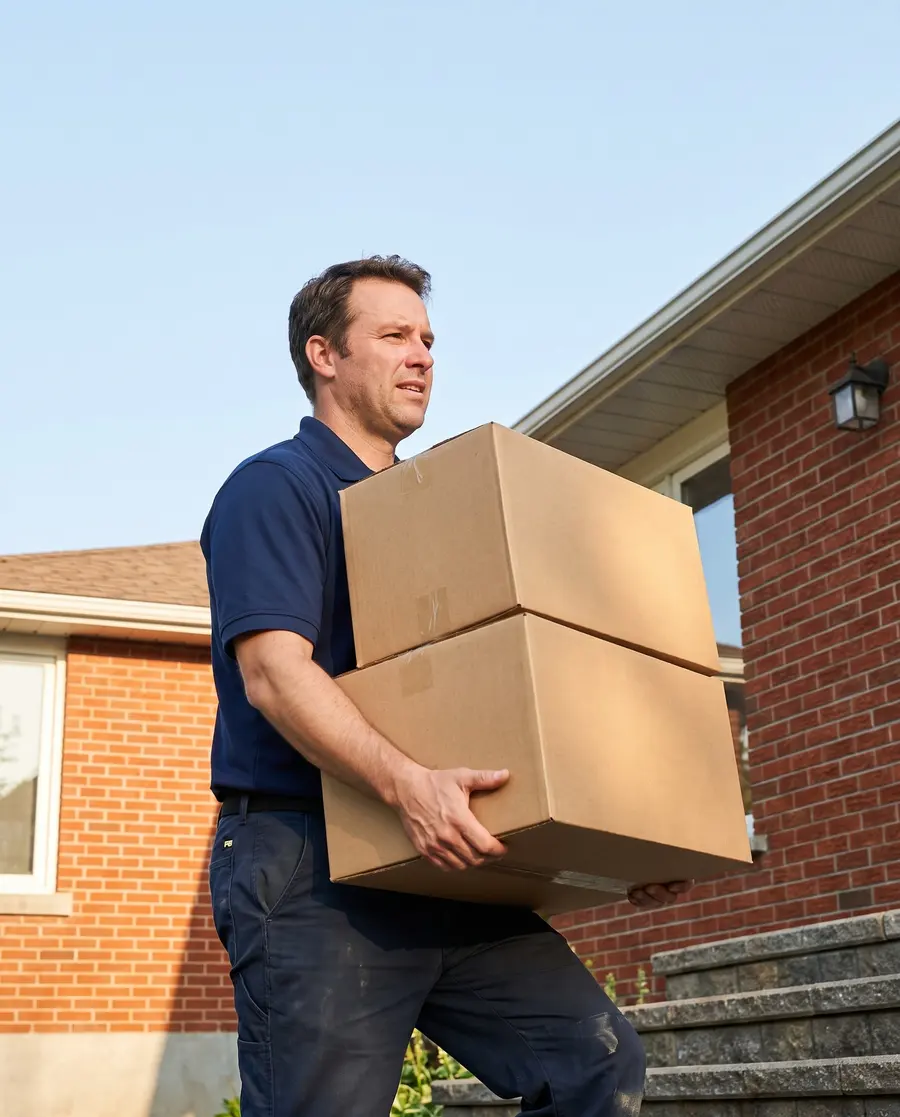
What to pack yourself and what to leave to the crew
Decide first who packs what. Our packers and movers offer three ways to split it, and each one changes how much of this page is your job:
Full packing
We bring the boxes and the tape and pack the whole home, with every box labelled by room.
Fragile-only packing
You pack the everyday things. We pack the glass, artwork, mirrors and electronics.
You pack, we move
You pack every box yourself, and the crew moves the boxes and the furniture.
What to pack first: the order, zone by zone
For a family home, start four to six weeks before moving day. Basements and garages hold more than people expect, so they go first. Pack by zone and finish one before you open the next, so the rooms you live in stay usable until the end.
Furniture and appliances are the crew's job. Leave the fridge, stove, washer and dryer emptied and ready. The order, counted back from moving day:
Six to four weeks out: storage areas
Sort the basement, garage and storage rooms into keep, give, sell and dispose, and pack the keep pile as you go. Out-of-season things go first: snowsuits in July, pool toys in January.
Three weeks out: spare rooms
Guest room, office, books, frames, art, out-of-season clothes and spare linens.
Two weeks out: living areas and the first kitchen pass
Living and dining rooms, plus the kitchen things you will not miss: the stand mixer, the good china, the roasting pan.
The last week: bedrooms and bathrooms
Everything except the beds, a few outfits each and the toiletries you use daily.
The last evening: kitchen basics and the essentials bag
Pack the last plates and pots, strip the beds into a labelled box, and close the bag that stays with you.
Why labelling every box by room saves the most time
This one pays back most on moving day. A label has one job: tell the person carrying the box where to put it down, and tell you later what is inside without cutting the tape.
Put four things on every box: the room it goes to in the new home, three or four words of contents, a box number, and FRAGILE or THIS SIDE UP where it matters. Write them on two sides. Boxes stack in the truck, so a label on the lid is hidden the moment another box sits on it.
Our colour code is simple: blue for the kitchen, green for bedrooms and red for anything fragile. Colour reads from across a room, so a crew carrying a box down a hallway can match it to a strip of tape on the door frame without stopping.
Numbers answer the question colours cannot: is everything here? Keep one inventory sheet with the number, room and contents of each box, and tick each number off the truck. A missing box shows up that evening, not three weeks later when you look for the winter boots.
How to pack a kitchen for moving
The kitchen is the hardest room to pack. It holds the heaviest boxes and the most breakable ones in the house, often from the same cupboard, and you cook in it until the last day. Use small and medium boxes, a divided box for glasses, and plenty of packing paper:
Dishes
Put crumpled paper in the bottom of a small box. Wrap each plate on its own and stand the plates on edge, like records, rather than stacking them flat. Fill every gap, then shake the box gently. If anything moves, add more paper.
Glasses
One per cell in a divided box, with a ball of paper inside each glass. Wrap the stem of a wine glass first, since it is the part that snaps. Never lay a glass on its side.
Pots and pans
Nest them by size with a sheet of paper between each, and bundle the lids together down the side of the box.
Small appliances and knives
Clean and dry appliances, tape the cord to the body and wrap any glass jug on its own. Wrap each knife blade in a towel or cardboard, tape it, and write KNIVES on the box.
Bottles and open jars
Shampoo, cleaners and sauces leak in a box. Unscrew the cap, put a square of cling wrap over the opening, and screw the cap back on over it. Pack them upright in a plastic bag.
The open-first box
The kettle, one pot, a plate, bowl, mug and cutlery for each person, dish soap and a dish towel. It rides in your car, so the first breakfast needs no searching.
How to pack fragile items
The method is the same for a teacup and a table lamp. Five steps, every box:
1. Wrap each piece on its own
Never two glasses in one sheet. Every item is cushioned on all sides and touches nothing else.
2. Choose a small box
Big boxes let things shift. Heavy fragile pieces go in small boxes.
3. Pad the bottom
A layer of crumpled paper or bubble wrap before anything goes in.
4. Fill every gap and pad the top
Shake the closed box gently. If anything moves, open it and add more.
5. Label it
Fragile, this side up and the room, on the top and one side.
Mirrors and framed art
Treat a mirror like framed glass. Tape an X across the face with low-tack tape, put rigid cardboard over the front and back, add corner protectors, and wrap it in a moving blanket or bubble wrap. Mirrors travel standing on edge, never flat.
For a framed painting, the Canadian Conservation Institute, part of the Government of Canada, publishes the method. Tape the glass with low-tack tape, cut rigid cardboard to the frame so it never touches the painting, seal it in clear plastic with an overlap of about 8 cm at the back, and cushion the outside with bubble wrap or thin foam. Mark which side is the front.
If you have a lot of glass or art, little time, or a long drive ahead, hand that part over. Our long distance movers in Ottawa take oversized pieces apart before the trip and rebuild them on arrival.
How to pack a TV and electronics
Gather everything before you unplug anything, so the TV is never left leaning against a wall half-wrapped. Then in this order:
Photograph the back
Before unplugging a TV or computer, take a phone photo of where each cable goes. It saves an hour of guessing at the new place.
Roll, label and bag the cables
Coil each cable into a cardboard toilet paper roll and write on the roll what it belongs to. Cables, remotes and chargers go in one labelled box that travels with the device.
Cover the screen
A moving blanket or a soft cloth over the glass, with the tape on the blanket and never on the screen.
Box it upright
Use the original box if you kept it, or a box sized for the screen with padding on every side, standing on its bottom edge.
Carry it with two people
Hold the frame, not the panel. LG's own guidance is not to move a large TV by yourself and not to press on the screen.
Back up the computer
Copy your files to a drive or the cloud, and keep that drive with you, not on the truck.
Packing tips with what you already own
Before you buy a roll of bubble wrap, look at what is already in the house:
Socks for glasses
A clean sock holds a glass snugly and keeps it from knocking against its neighbours.
Towels, linens and scarves for dishes
Wrap plates and bowls in them instead of newspaper. You have to move them anyway.
Foam between plates
A thin sheet of foam between each plate cushions them and unpacks cleanly.
Suitcases, baskets and hampers
Books and shoes in a rolling suitcase are easier to move than in a box. Toys, towels and pantry items travel in baskets as they are.
Cling wrap on a dresser drawer
Wrap a drawer with the clothes still inside and it becomes its own box, ready to slide back in at the new place. Ask the crew first if the dresser is heavy.
Keep the hardware with the furniture
Beds, tables and other large pieces often come apart for a move. Our crew takes them apart and puts them back together, and our About page puts the standard simply: “A large table taken apart at one end, and the time and care taken to reassemble it correctly at the other.”
That only works if every bolt arrives with its piece. Put the screws, bolts and Allen key from each item in their own zip bag, write the item on the bag, and tape it to the underside of that piece. Never one mixed bag for the whole house.
Once a piece is out the door, our guide to wrapping furniture covers how it is protected.
How to pack the garage and basement
A garage full of heavy things two days before the truck arrives is the worst moving week. Once the hazardous items are out, pack in this order:
Seasonal gear first
Patio cushions in winter, snow shovels and the snowblower in summer.
Three piles
Keep, give away, dispose. Every box you skip is one you do not tape, carry or unpack.
Empty the fuel tanks
Run the mower, the trimmer and the snowblower dry, or drain them, before moving day.
Small boxes for tools
Hand tools and hardware are heavy. Keep boxes small enough to lift, and bundle rakes and shovels with tape.
Bag the shelving hardware
Take shelving apart, bag the bolts and tape the bag to a shelf.
What not to pack, and what stays with you
Movers do not carry dangerous goods: anything flammable, corrosive or explosive. We will load the barbecue but not the propane tank. Sort these out before moving day:
Fuels
Gasoline, propane cylinders, motor oil and antifreeze.
Paint and chemicals
Paint, cleaning products and fertilizers.
Car batteries and fireworks
Anything with a flammable, corrosive or explosive warning symbol.
Food, plants and pets
Perishables spoil on the way, and plants and pets travel with you.
Papers and valuables
Jewellery, cash, IDs, health records and important papers ride with you, in a bag that never leaves your side.
The overnight bag
Work clothes, pyjamas, toiletries, medication, phone chargers and the paperwork for the move, kept in your car.
Where to take paint, batteries and chemicals in Ottawa
Packing day is when half-empty paint cans and old batteries turn up. The City of Ottawa's Waste Explorer lists retailers that take back many hazardous items every day, including light bulbs, batteries, paint and oil.
The City also runs one-day household hazardous waste events, and says new dates will be announced in spring 2027. At an event, containers larger than 20 litres are not accepted and loads over 100 litres are refused. If your things have to wait between homes, our storage keeps household items and furniture, but not this list.
What to do with the packing waste
Packing still leaves waste. The City's Waste Explorer sorts it like this, and our guide to moving boxes has the rest:
Packing paper and cardboard
Black bin. Flatten boxes and break them down to no larger than 60 cm by 60 cm.
Bubble wrap and foam packaging
Blue bin, since Circular Materials took over Ottawa's recycling on January 1, 2026.
Cling wrap and packing peanuts
Regular garbage. Keep the peanuts for someone else's move instead.
Questions about moving with TLC
What do you pack first when you're moving?
The things you use least: out-of-season clothes, books, décor, and everything in the basement, garage and spare rooms. The kitchen and bedrooms are packed last, with the basics left for the final evening.
Is it better to put clothes in bags or boxes when moving?
Either works. Large boxes take light things like clothing and linens, reusable bags carry soft things, and a dresser drawer wrapped in cling wrap with the clothes inside becomes its own box. Keep a few outfits out for the last week.
What is the most forgotten thing when moving?
The bag that stays with you: phone chargers, medication, toiletries and the papers for the move. After that, the hardware. Bag the bolts from each piece of furniture and tape the bag to that piece.
What is the hardest room to pack when moving?
The kitchen, because it holds the heaviest and the most breakable boxes in the house. The garage and basement come next, because they hold more than people expect. Pack the garage and basement first and the kitchen in three passes.
How do I pack glasses without bubble wrap?
Put each glass in a clean sock, or wrap it in a towel or tea towel, and stand the glasses upright in a small box with the gaps filled.
How do I keep screws and bolts from getting lost in a move?
Put each item's hardware in its own zip bag, write the item on the bag, and tape the bag to the underside of that piece of furniture.
Can the movers pack for me?
Yes. TLC offers full packing, where we bring the boxes and the tape and pack the whole home, or fragile-only packing for glass, artwork, mirrors and electronics. If you pack yourself, we move the boxes and the furniture.
Free moving quote
Get your free estimate
Tell us about your move and we will come back with a free, obligation-free estimate. You can also call (613) 830-7402.